
Friday, 22 June 2012

Thursday, 21 June 2012
AO1 - Analysing the marketing mix of The Debt

As part of researching marketing campaigns of an existing media product, I will be analysing the marketing campaign for "The Debt" (2011), starring Helen Mirren, Sam Worthington and directed by John Madden. Despite an extensive media campaign to generate revenue, the film wasn't classed as a 'blockbuster', although it gained fair and positive reviews. The studio that produced, "The Debt" was "Marv Films", and the film was distributed by "Focus Features" and "Mirimax Films" and was released in cinemas in the US on 31 August 2011. I chose to analyse the marketing mix for "The Debt" as it's target market and audience demographic were not my peer group.
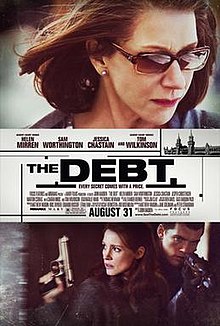

"The Debt" made use of a full print marketing campaign, full of cinema posters, advertisements in papers and magazines and posters that could be seen on billboards, bus stops, etc. One such poster can be seen above. To seperate the film, and to possibly appeal to different demographics on either side of the Atlantic, the film used several different posters for different countries. The French release poster can be seen above too.
The main theatrical poster was designed by Empire Designs, who specialise in the horror and thriller genre, so it could be possible that the design was part of the genre iconography the film producers wanted to create and promote.
Something that I find particularly interesting in the differences in the two posters is that the French poster looks much more like the movie is a thriller, compared to that of the first one where it looks much more conservative and adult - whereas the first one looks like a stereotyped James Bond film. The print promotions also continued in America, where it follows the same kind of format as the UK promotional poster, with a landscape version instead.
Following from this, the media campaign in terms of motion picture was also extensive, with cinematic and TV trailers released in 2010. The trailer above is 2.50minutes long and aims to capture the excitement and genre codes and conventions in order to grab the attention of it's target audience. I think the trailer fits well with the print campaign as they both follow a house style of tinted pictures, vignette borders with blur and shadows to create an enigmatic and suspenseful feeling about the film.
Thursday, 15 September 2011
AO1 - An Analysis of the Marketing Mix for a Product

 The marketing mix I will be analysing is the advertisement campaign for the new, and first series of Big Brother on Channel 5, the fifth terrestrial television channel. Big Brother, Celebrity Big Brother and it's spin-offs (Big Brother's Bit on the Side) are produced by the UK franchise of Endemol, the international production company behind the formats of Deal or no Deal, 8 out of 10 Cats, Ready Steady Cook, Gala TV, Total Wipeout and 101 Ways to Leave a Gameshow. Big Brother is hosted by Brian Dowling, whilst it's spin-off is presented by Emma Willis, Alice Levine and Jamie East.
Big Brother began on Channel 4 and remains one of it's most successful shows of all time and due to dwindling viewers, it was dropped, and Channel 5 picked it up in 2011. Channel 5 (owned by Richard Desmond's Northern and Shell) purchased the format for an estimated £200 million. Although viewers are smaller than what they were (averaging 2 million, as appose to the 7 million it once did), advertisers are still keen to invest in the program due to the young audience it brings in. Big Brother has been sponsored by "Freederm" for the past 2 years, a cosmetic and skin care company aimed at teenagers.
The marketing campaign could be considered a success as the show, with it's marketing, has pulled in high viewers for Channel 5, helping the channel to regularly beat shows in viewers on Channel 4, slowly overtaking it's prime time share.
Channel 5 wanted to establish their Big Brother, and make it different from the format that was used for ten years on Channel 4, and to do this, they launched the show with a widespread marketing campaign that involved;
- Channel 5 station idents
- Television Trailers (on C5 and other channels)
- Print Adverts (papers, magazines, posters etc.)
- Bill Boards
- Bus Adverts, Bus Station Adverts, Rotating Adverts at cinemas, etc.
The marketing mix also involved both direct and indirect advertising to gain viewers, advertisers and money.


Across the adverts, the new in-house style of the Big Brother was in place with some imported graphics and styles from Channel 5 to keep the style cohesive with the channel's on screen identity. This year's Big Brother's on screen identity was designed by Channel 5's team, "Hello Charlie", who designed the 'eye' logo to, where as previous years the design and identity was produced by Channel 4, Endemol and Daniel Eatock, who designed the 'eye' logo for Big Brother UK (and some international versions) since 2003.
On the right is one of the magazine adverts used to promote the 2011 launch of Big Brother, which began with a celebrity edition. This print advert is an example of how the styles from both Channel 5 and Big Brother have been blended to create the advert. The house-style is the same across the whole marketing campaign; videos, which can be seen above and below, and print.
The main colours of the promotional campaign are contrasting blue and pink, the colours used in the new 'eye' logo. The print adverts, and promotional trailers were usually based on a white background, apart from the promotional channel idents. These short clips of adverts had a dark blue background with an animated show logo. One of the idents that was used followed the style of the print adverts; images of presenter, colour scheme, etc. This ident was used previous to programs whilst a continuity announced spoke over it to introduce Big Brother and other prime time shows on the channel to pull in viewers.
Throughout the marketing mix, it seems that Channel 5 is obsessed with advertising itself to draw in viewers to other programs on the channel with it being the lowest rating terrestrial television channel. Channel 5 purchasing Big Brother could be seen as an advertising ploy to steal viewers and advertisers from Channel 4, the stations the show was previously on.
Freederm, a skin care company, sponsored Big Brother, Celebrity Big Brother and Big Brother's Bit on the Side for £2.5 million which is great for pulling in viewers of the show's target audience, teenagers and young adults. This merchandising, by being associated with a product that is widely used by younger products, it promotes the product, but allows the show to be promoted in it's products in a circle of advertising. The money that the channel gains from it's sponsor could also allow the channel to promote the program in other ways.


Channel 5 also advertised the new Big Brother on other television networks, for example, in Daybreak on ITV 1 which would be to draw in viewers and advertisers. By advertising on other networks, they'll draw away competition from other channels, but also reach out to audiences which wouldn't typically watch the show, and it seems to work as it has almost doubled Channel 5's viewers when Big Brother is on air.
The show has been given blanket advertising in Northern and Shell publications, owned by Richard Desmond, who also owns Channel 5. Northern and Shell publications include the "OK!" magazines and "The Daily Star". The print adverts usually cover a whole page of a publication to really grasp the reader's attention, with assistance from the colourful, explosive and futuristic house style.
Social media is used a lot to promote the show, and was used both before and during the series being aired. Before the show had launched, the official Big Brother Twitter and Facebook pages were updated with information about the upcoming series (hosts, narrators, house pictures, etc) and information on how people could be involved with the show (audience member applications, etc). The use of social networks helps to spark word of mouth and discussion of the show in a bid to win ratings and advertising shares. The buzz created through Twitter in terms of 'trending' aided the show to victory in terms of rating, gathering a huge average of 5 million viewers for Channel 5. The main users of social networks are young adults and teenagers, the target audience of Big Brother, therefore, the focus on social networks will work out great for this style of show.
Due to the infamous nature of the show, Big Brother is often on the receiving end of extensive, free, indirect promotion. Across the tabloids (The Sun, Mirror, Guardian), magazines (Hello, OK!, New), and websites (DigitalSpy, Unreality TV), it's often speculated far in advance as to who'll be entering the Big Brother house and how tired and boring the format of the programme has become which also gathers interest in the show.
The celebrity version of the show was advertised much more than the standard edition that followed immediately after, and this was reflected in the ratings of the show as the average of the standard edition fell to around 1.5 million viewers as appose to the 2/3 million it gathered for the celebrity version.
Celebrity Big Brother and the non-celebrity version of the format weren't promoted on commercial radio, although the host, Brian Dowling, did take part in interviews and guest stints for shows, such as the interview on Loose Women below. The indirect advertising also builds suspense for the show and starts discussions about the show.
I'd consider the marketing mix for this series of Big Brother a success as it has boosted Channel 5's ratings, advertising shares and revenue since the format launched on the television network. Whilst this series is the lowest rating Big Brother series to date, it has proven to be a hit on Channel 5 as the ratings for other shows, such as it's soaps (Home and Away, Neighbours), magazine shows (OK!TV, Big Brother's Bit on the Side) and seperate reality shows (The Batchelor), has also risen viewing figures, along with it's market and ratings shares.
Big Brother also has a licenced merchandise store called www.bigbrothershop.com, which allows the general public to purchase items such as mugs, t-shirts, jumpers and such items with the Big Brother 2011 logo on (these can be seen below). This generates revenue for Endemol and is subliminal advertising for Big Brother too. Signs and stickers are also supplied by the production company to attendees of eviction nights which adds to the whole value of merchandise. Merchandise is charged relatively cheap, with branded mugs at £5 and branded t-shirts at £15.

Social media is used a lot to promote the show, and was used both before and during the series being aired. Before the show had launched, the official Big Brother Twitter and Facebook pages were updated with information about the upcoming series (hosts, narrators, house pictures, etc) and information on how people could be involved with the show (audience member applications, etc). The use of social networks helps to spark word of mouth and discussion of the show in a bid to win ratings and advertising shares. The buzz created through Twitter in terms of 'trending' aided the show to victory in terms of rating, gathering a huge average of 5 million viewers for Channel 5. The main users of social networks are young adults and teenagers, the target audience of Big Brother, therefore, the focus on social networks will work out great for this style of show.
Due to the infamous nature of the show, Big Brother is often on the receiving end of extensive, free, indirect promotion. Across the tabloids (The Sun, Mirror, Guardian), magazines (Hello, OK!, New), and websites (DigitalSpy, Unreality TV), it's often speculated far in advance as to who'll be entering the Big Brother house and how tired and boring the format of the programme has become which also gathers interest in the show.
The celebrity version of the show was advertised much more than the standard edition that followed immediately after, and this was reflected in the ratings of the show as the average of the standard edition fell to around 1.5 million viewers as appose to the 2/3 million it gathered for the celebrity version.
Celebrity Big Brother and the non-celebrity version of the format weren't promoted on commercial radio, although the host, Brian Dowling, did take part in interviews and guest stints for shows, such as the interview on Loose Women below. The indirect advertising also builds suspense for the show and starts discussions about the show.
I'd consider the marketing mix for this series of Big Brother a success as it has boosted Channel 5's ratings, advertising shares and revenue since the format launched on the television network. Whilst this series is the lowest rating Big Brother series to date, it has proven to be a hit on Channel 5 as the ratings for other shows, such as it's soaps (Home and Away, Neighbours), magazine shows (OK!TV, Big Brother's Bit on the Side) and seperate reality shows (The Batchelor), has also risen viewing figures, along with it's market and ratings shares.
Big Brother also has a licenced merchandise store called www.bigbrothershop.com, which allows the general public to purchase items such as mugs, t-shirts, jumpers and such items with the Big Brother 2011 logo on (these can be seen below). This generates revenue for Endemol and is subliminal advertising for Big Brother too. Signs and stickers are also supplied by the production company to attendees of eviction nights which adds to the whole value of merchandise. Merchandise is charged relatively cheap, with branded mugs at £5 and branded t-shirts at £15.

Wednesday, 14 September 2011
AO2 - Produce a Marketing Plan for a new media product
I will be creating a marketing plan for a new media product and my chosen product will be the thriller I created in Unit 23 named, "Dead Air". The aim of the campaign is to raise awareness of the product and to generate revenue from cinema sales. The clip we produced for Unit 23 can be seen below. The thriller is mysterious, contains very little noise and is black and white so I will most definitely take this into account when producing my marketing campaign.
In competition with "Dead Air" will be the wave of new thrillers and horrors that are released around Halloween, as we plan to release ours around Halloween 2011 too - such thrillers include, "Paranormal Activity 3". Horror producers usually release films around Halloween as not only will it be half term but to boost revenue by cashing in on the popular season. From my market research, there are three distinct films which are particular close in terms of conventions and themes released around the time "Dead Air" is set to release and it could impact audience figures and revenue for the production. The first is "Paranormal Activity 3".

Don't be afraid of the Dark appears to miss out on it's whole target audience, which is typically teenagers and young adults, as it's not yet using social networks to promote the film - despite the fact it was released two/three months ago. Described in reviews as a a "lazy horror", it seems that the film and the promotional campaign has been relatively low budget.
In competition with "Dead Air" will be the wave of new thrillers and horrors that are released around Halloween, as we plan to release ours around Halloween 2011 too - such thrillers include, "Paranormal Activity 3". Horror producers usually release films around Halloween as not only will it be half term but to boost revenue by cashing in on the popular season. From my market research, there are three distinct films which are particular close in terms of conventions and themes released around the time "Dead Air" is set to release and it could impact audience figures and revenue for the production. The first is "Paranormal Activity 3".

Paranormal Activity 3 is released on 21/10/11 and already the marketing campaign has consisted of direct and indirect advertising. Through posters, trailers, interviews, social media and word of mouth, the third installment of the Paranormal Activity series has already built up a large reputation. Paranormal Activity 3 is a supernatural horror film directed by Ariel Shulman and Henry Joost and stars Katie Featherston, Sprague Grayden and Brian Boland. As of yet, the film hasn't been certified for UK audiences.
This film is similar to "Dead Air" in the sense that both are set around every day life. Paranormal Activity films often follow the lives of a family, whereas my film follows those who work in a haunted building. Another similarity which will provide competition for my film, if it were to be released, is the colour scheme - black and white. Our film's opening sequence is black and white, just like some scenes from the Paranormal Activity Films.
Paranormal Activity 3's use of social media to promote the film is interesting, as they are using Twitter and Facebook for competitions. Not only does this get people through the door, but it also promotes the film, sparking word of mouth and suspense to the film.
Everything that promotes the third Paranormal Activity film follows a house style, which usually consists of the "Courier" font that is typically featured on the footage of a dated, domestic video camera to show the time and date of film, with the colouring of photographs as if it's taken at night, on a video camera. The theme of a video camera runs throughout the marketing campaign for the films and acts as a cohesive device across it's promotions. I want to emulate the success of the trilogy's marketing campaign by using some sort of cohesive device - it's likely to be inserting the image of the 'ghoul' in "Dead Air" in the same position across the marketing campaign's print products.
A second film is "Shark Night 3D". Released in the UK on the 30th September 2011, Shark Night 3D is a horror-thriller film directed by David R Ellis. Shark Night 3D stars Sarah Paxton, Chris Carmack, Joel David Moore, Chris Zylka and Sinqua Walls. Shark Night 3D was rated 15 for UK audiences.
Shark Night's marketing mix has been extensive, consisting largely of direct advertising, although there is some indirect. The advertising campaign consists of cinema and television trailers, online adverts, print adverts (posters, billboards, bus stops, vehicle, etc) and interviews. Like the Paranormal Activity trilogy, Shark Night also relies heavily upon social media, primarily Twitter, where they 'Re-Tweet' user's positive opinions on the film to boost the films reputation, sparking word-of-mouth, like Paranormal Activity and other films that use Twitter and social media. I feel I will use this in my campaign as it's definitely the 'done thing' my target audience does. Shark Night 3D also use Facebook for their social media promotion as it is the most popular social network.
Unlike the Paranormal Activity trilogy, Shark Night doesn't have it's own, dedicated website. The official movie website is run as a sub-site of the production company of the film, "Rogue".
A semantic of water is included in the house style across the marketing campaign, and it's something that's similar to the way the producers advertise Paranormal Activity, as they include a semantic of video cameras. The house style of the promotional campaign for Shark Night 3D consists of a lot of blue - signifying the water. Along with the blue, the images usually consist of deep water, signifying danger. The titles are almost action-comic like, looking as if it's just burst on the screen/paper, parallel to how a shark would attack it's victims. A blood splatter is also sprayed over the title, with the red also signifying danger. The house style appears to be inconsistent in this promotional campaign, with the website looking completely different to the promotional posters. The only consistent thing about the marketing mix would be the logo.
Everything that promotes the third Paranormal Activity film follows a house style, which usually consists of the "Courier" font that is typically featured on the footage of a dated, domestic video camera to show the time and date of film, with the colouring of photographs as if it's taken at night, on a video camera. The theme of a video camera runs throughout the marketing campaign for the films and acts as a cohesive device across it's promotions. I want to emulate the success of the trilogy's marketing campaign by using some sort of cohesive device - it's likely to be inserting the image of the 'ghoul' in "Dead Air" in the same position across the marketing campaign's print products.
A second film is "Shark Night 3D". Released in the UK on the 30th September 2011, Shark Night 3D is a horror-thriller film directed by David R Ellis. Shark Night 3D stars Sarah Paxton, Chris Carmack, Joel David Moore, Chris Zylka and Sinqua Walls. Shark Night 3D was rated 15 for UK audiences.
Shark Night's marketing mix has been extensive, consisting largely of direct advertising, although there is some indirect. The advertising campaign consists of cinema and television trailers, online adverts, print adverts (posters, billboards, bus stops, vehicle, etc) and interviews. Like the Paranormal Activity trilogy, Shark Night also relies heavily upon social media, primarily Twitter, where they 'Re-Tweet' user's positive opinions on the film to boost the films reputation, sparking word-of-mouth, like Paranormal Activity and other films that use Twitter and social media. I feel I will use this in my campaign as it's definitely the 'done thing' my target audience does. Shark Night 3D also use Facebook for their social media promotion as it is the most popular social network.
Unlike the Paranormal Activity trilogy, Shark Night doesn't have it's own, dedicated website. The official movie website is run as a sub-site of the production company of the film, "Rogue".
A semantic of water is included in the house style across the marketing campaign, and it's something that's similar to the way the producers advertise Paranormal Activity, as they include a semantic of video cameras. The house style of the promotional campaign for Shark Night 3D consists of a lot of blue - signifying the water. Along with the blue, the images usually consist of deep water, signifying danger. The titles are almost action-comic like, looking as if it's just burst on the screen/paper, parallel to how a shark would attack it's victims. A blood splatter is also sprayed over the title, with the red also signifying danger. The house style appears to be inconsistent in this promotional campaign, with the website looking completely different to the promotional posters. The only consistent thing about the marketing mix would be the logo.
The third film which I think could be competition for "Dead Air" is "Don't Be Afraid of the Dark 3D".
Don't be afraid of the Dark is also a horror-thriller, rated 15, directed by Troy Nixie and starring Katie Holmes, Guy Pierce, Bailee Madison and Jack Thompson. The film was released in the USA on the 26th August and in the UK on the 7th October 2011 following a not-so-extensive marketing campaign. The lack of marketing and word of mouth has resulted in the film only taking in around $1million at box office worldwide. The film is neither a critical, nor commercial success.
The marketing mix for the film is minimal, with a trailer that's not been promoted on UK television, and a poster which has only been advertised at cinemas. There's barely any indirect advertising in the UK for this film.
Don't be afraid of the Dark appears to miss out on it's whole target audience, which is typically teenagers and young adults, as it's not yet using social networks to promote the film - despite the fact it was released two/three months ago. Described in reviews as a a "lazy horror", it seems that the film and the promotional campaign has been relatively low budget.
I haven't really seen anything that I want to take inspiration from using the marketing campaign for this film.
Our target audience and demographic will be young adults, aged 15 to 24, aimed at both genders, although typical fans of the format are predominantly male so my marketing plan will reflect this. The potential market would definitely be national cinema, if not international as it follows the huge trend in thriller cinema overseas and in the UK.
As part of the marketing campaign, I will be producing a feature article as a means of indirect advertising, a poster as a direct advertisement and releasing merchandise post-cinema release to boost DVD and Blueray sales.
I will definitely take into account governing bodies, especially the ASA, who are a self-regulatory organisation that regulates the contents of ads, promotions and marketing in the UK. The ASA isn't funded by the government. I will also be taking into account The CAP (committee of advertising practice), the sister organisation of the ASA. Whilst the ASA investigate and moderate content of advertisements & promotions, the CAP revise and update the British code of advertising, so I will be sure to follow the codes in my marketing campaign to avoid trouble from the bodies.
The plan is to release the movie on the 30/10/11, the night before Halloween. Because of this, I would release the trailer on 30/06/11 on an official YouTube account and website, four months before the films release to generate a buzz on social media such as Facebook and Twitter, and working with their public relations team, I would gather feedback and results based on what people have said about the trailer ready for a further trailer release on 30/07/1.
I will be releasing the cinematic poster for the movie on 30/08/11 to encourage people to pre-book tickets and I will be designing the poster as part of my unit. The indirect advertisement of a review will be released in a magazine on 15/08/11. Finally, my merchandise will be released one month after it's cinematic release in preparation for the films DVD release. Released on 30/11/11, it will be available for the Christmas market to boost more revenue, and the DVD would then be released on 30/10/12 for the Christmas market the following year.
I will be gaining feedback using a focus group for the marketing campaign up until the merchandise release for improvements should I produce another marketing campaign. I will be using a focus group as it's the easiest way to get opinions from a number of different audiences.
Our target audience and demographic will be young adults, aged 15 to 24, aimed at both genders, although typical fans of the format are predominantly male so my marketing plan will reflect this. The potential market would definitely be national cinema, if not international as it follows the huge trend in thriller cinema overseas and in the UK.
As part of the marketing campaign, I will be producing a feature article as a means of indirect advertising, a poster as a direct advertisement and releasing merchandise post-cinema release to boost DVD and Blueray sales.
I will definitely take into account governing bodies, especially the ASA, who are a self-regulatory organisation that regulates the contents of ads, promotions and marketing in the UK. The ASA isn't funded by the government. I will also be taking into account The CAP (committee of advertising practice), the sister organisation of the ASA. Whilst the ASA investigate and moderate content of advertisements & promotions, the CAP revise and update the British code of advertising, so I will be sure to follow the codes in my marketing campaign to avoid trouble from the bodies.
The plan is to release the movie on the 30/10/11, the night before Halloween. Because of this, I would release the trailer on 30/06/11 on an official YouTube account and website, four months before the films release to generate a buzz on social media such as Facebook and Twitter, and working with their public relations team, I would gather feedback and results based on what people have said about the trailer ready for a further trailer release on 30/07/1.
I will be releasing the cinematic poster for the movie on 30/08/11 to encourage people to pre-book tickets and I will be designing the poster as part of my unit. The indirect advertisement of a review will be released in a magazine on 15/08/11. Finally, my merchandise will be released one month after it's cinematic release in preparation for the films DVD release. Released on 30/11/11, it will be available for the Christmas market to boost more revenue, and the DVD would then be released on 30/10/12 for the Christmas market the following year.
I will be gaining feedback using a focus group for the marketing campaign up until the merchandise release for improvements should I produce another marketing campaign. I will be using a focus group as it's the easiest way to get opinions from a number of different audiences.
Tuesday, 13 September 2011
AO2 - Regulatory Organisations Research
Following my marketing plan, I decided to do some more research into media regulatory bodies in order to make my campaign my successful and industry standard.
BARB
The Broadcasters' Audience Research Board (BARB) is the organisation that compiles television audiences in the UK. BARB was introduced to replace the previous ratings system, JICTAR, where the BBC, ITV, Channel 4, 5 and BSkyB collected their own audience figures. BARB has around 5,000 homes in which they place a box above their TV which tracks what channel they are watching. The data they collect is then multiplied to give an average across the UK and published the next day at 9.30am, known as the overnight ratings. A week or so later, the 'timeshift', online and recorded figures are gathered and published. BARB is extremely important in commercial television to see whether or not their advertising has worked.
RAJAR
RAJAR (Radio Joint Audience Research Limited) was founded in 1992 to gather the audience figures of all radio stations operating in the UK. RAJAR is owned by the BBC and the RadioCentre - the UK's commercial radio trade body. Before RAJAR was set up, the BBC and The CRCA, RadioCentre's predecessor, gathered their audience figures separately. The way RAJAR collects data using Ipsos MORI, responsible for door-to-door surveys and polls. RAJAR hand out diaries to 130,000 a year, and the data is then collected based on what the people fill in. The diaries require you to fill in what radio station you have listened to and at what time. I have participated in one of these diaries in the past year and you are required to write down the radio stations you have listened to in the past week and at what times, then, fill it out online and after a week, your account is shut down as they compiled the figures.
ABC
The ABC (Audit Bureau of Circulation) is based in both the UK and Ireland and is responsible for two things. The ABC manage and up-hold standards that the media industry needs to determine how the industry data is prepared and reported. The second responsibility of the Audit Bureau of Circulation is to offer an audit and compliance service to check that data and processes meet these industry agreed standards. The ABC is non-for-profit and governed by the media industry with elected board members, consisting of advertisers, advertising agencies, media owners and their representative trade bodies.
ASA
ASA is the Advertising Standards Authority, a self-regulatory organisation (SRO) that regulates the content of advertisements, sales promotions and direct marketing in the UK. The ASA is not funded by the government but by a levy on the media industry.
CAP
The CAP (Committee of Advertising Practice) is the sister organisation of the ASA. Whereas it is the ASA's responsiblity to investigate and moderator content of advertisements and sales promotions, it is the CAP's responsiblity is to revise and update the British code of advertising, direct marketing and sales promotion through it's code policy team.
CAVIAR
CAVIAR (Cinema and Video Industry Audience Research) was established in 1985 to provide reliable cinema audience and marketing figures for media planners. CAVIAR asks 2,500 people, aged 7 to 44, in the UK to complete a survey to compiled audience figures.
BARB
The Broadcasters' Audience Research Board (BARB) is the organisation that compiles television audiences in the UK. BARB was introduced to replace the previous ratings system, JICTAR, where the BBC, ITV, Channel 4, 5 and BSkyB collected their own audience figures. BARB has around 5,000 homes in which they place a box above their TV which tracks what channel they are watching. The data they collect is then multiplied to give an average across the UK and published the next day at 9.30am, known as the overnight ratings. A week or so later, the 'timeshift', online and recorded figures are gathered and published. BARB is extremely important in commercial television to see whether or not their advertising has worked.
RAJAR
RAJAR (Radio Joint Audience Research Limited) was founded in 1992 to gather the audience figures of all radio stations operating in the UK. RAJAR is owned by the BBC and the RadioCentre - the UK's commercial radio trade body. Before RAJAR was set up, the BBC and The CRCA, RadioCentre's predecessor, gathered their audience figures separately. The way RAJAR collects data using Ipsos MORI, responsible for door-to-door surveys and polls. RAJAR hand out diaries to 130,000 a year, and the data is then collected based on what the people fill in. The diaries require you to fill in what radio station you have listened to and at what time. I have participated in one of these diaries in the past year and you are required to write down the radio stations you have listened to in the past week and at what times, then, fill it out online and after a week, your account is shut down as they compiled the figures.
ABC
The ABC (Audit Bureau of Circulation) is based in both the UK and Ireland and is responsible for two things. The ABC manage and up-hold standards that the media industry needs to determine how the industry data is prepared and reported. The second responsibility of the Audit Bureau of Circulation is to offer an audit and compliance service to check that data and processes meet these industry agreed standards. The ABC is non-for-profit and governed by the media industry with elected board members, consisting of advertisers, advertising agencies, media owners and their representative trade bodies.
ASA
ASA is the Advertising Standards Authority, a self-regulatory organisation (SRO) that regulates the content of advertisements, sales promotions and direct marketing in the UK. The ASA is not funded by the government but by a levy on the media industry.
CAP
The CAP (Committee of Advertising Practice) is the sister organisation of the ASA. Whereas it is the ASA's responsiblity to investigate and moderator content of advertisements and sales promotions, it is the CAP's responsiblity is to revise and update the British code of advertising, direct marketing and sales promotion through it's code policy team.
CAVIAR
CAVIAR (Cinema and Video Industry Audience Research) was established in 1985 to provide reliable cinema audience and marketing figures for media planners. CAVIAR asks 2,500 people, aged 7 to 44, in the UK to complete a survey to compiled audience figures.
Monday, 12 September 2011
AO2 - Practice Drafts: Adverts
Direct advertising draft: Poster
Here is the original, hand-drawn draft of my cinema poster that's promoting my film, "Dead Air". I have tried to keep the title cohesive with how it looks on screen in my thriller opener, possible changes will include a bigger and more predominant credit block.
On the left hand side of the poster, there is a triangle which appears to overlap the side of the poster. The 'coming soon' text and the graphology within the triangle should be consisted with the cinema company, for example, if it was Cineworld, the background would be red with the text being white. My promotion poster would have a black background, with the main text in white to emphasise the spooky nature of the film, it already creates some sort of enigma about the movie. In the poster's background, I'd like it to look like cracked ice in the corners.
The title of the film would be aligned left, but in the centre field, leaving space on the right for the image of the 'ghoul'.


Here is the original, hand-drawn draft of my cinema poster that's promoting my film, "Dead Air". I have tried to keep the title cohesive with how it looks on screen in my thriller opener, possible changes will include a bigger and more predominant credit block.
On the left hand side of the poster, there is a triangle which appears to overlap the side of the poster. The 'coming soon' text and the graphology within the triangle should be consisted with the cinema company, for example, if it was Cineworld, the background would be red with the text being white. My promotion poster would have a black background, with the main text in white to emphasise the spooky nature of the film, it already creates some sort of enigma about the movie. In the poster's background, I'd like it to look like cracked ice in the corners.
The title of the film would be aligned left, but in the centre field, leaving space on the right for the image of the 'ghoul'.

Indirect advertising draft: Film review in magazine
Sunday, 11 September 2011
AO2 - Practice Drafts: Promotions
Promotion Draft 1: Competition Outline
The competition will appear in a film magazine or the film section of a newspaper such as "The Sun", where readers will collect tokens released each week to win two free tickets to see "Dead Air" in a "Cineworld" cinema.
From 10/08/11, there will be a token each week until the release of the film and once a reader collects five and sends them off to the head offices of the newspaper, they will be sent tickets to see the film for their local Cineworld.
Although this promotion will be used in the marketing campaign, I won't be producing it for this unit.
Promotion Draft 2: Merchandise
The competition will appear in a film magazine or the film section of a newspaper such as "The Sun", where readers will collect tokens released each week to win two free tickets to see "Dead Air" in a "Cineworld" cinema.
From 10/08/11, there will be a token each week until the release of the film and once a reader collects five and sends them off to the head offices of the newspaper, they will be sent tickets to see the film for their local Cineworld.
Although this promotion will be used in the marketing campaign, I won't be producing it for this unit.
Promotion Draft 2: Merchandise
I will however, be producing merchandise for this unit. I have chosen to make a "Dead Air" branded USB pen which contains pictures and behind the scenes information exclusive to customers which will hopefully generate a healthy profit.
The USB pen will be black and the only branding will be the film in it's trademark white text, "Dead Air". It can also double up as a bracelet. I produced a hand drawn draft and it can be seen below...

The USB pen will be black and the only branding will be the film in it's trademark white text, "Dead Air". It can also double up as a bracelet. I produced a hand drawn draft and it can be seen below...

Subscribe to:
Comments (Atom)